The modern laundry room evolves past its purely utilitarian origins, metamorphosing into a intelligently organized yet aesthetically considered extension of the home's overall design narrative. Central to this design shift is the thoughtful implementation of purpose-built cabinetry, which serves as the essential element in managing clutter, optimizing workflow, and introducing significant design impact. Moving beyond basic wire racks, today's laundry cabinet design focuses intensely on customization, ergonomics, and material innovation to form a zone where efficiency feels intuitive and style abounds.
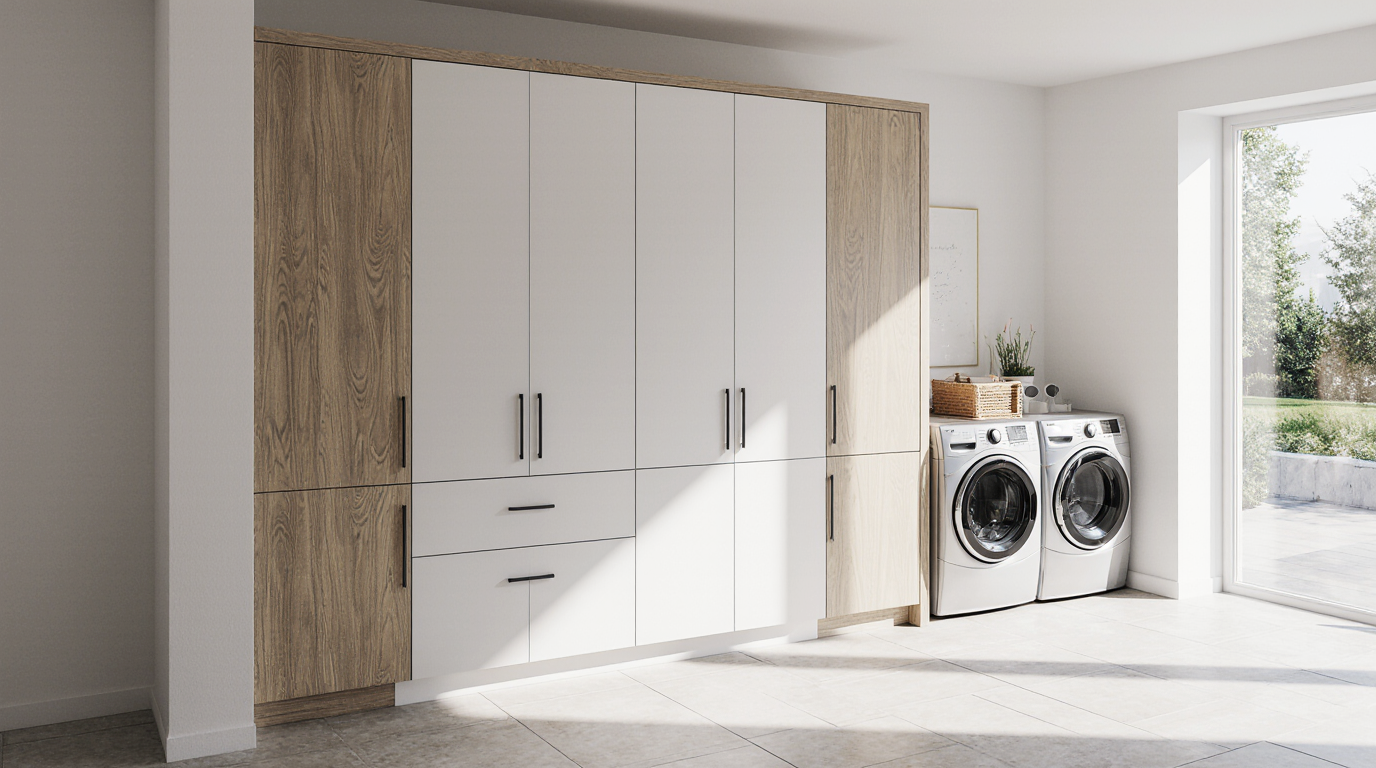
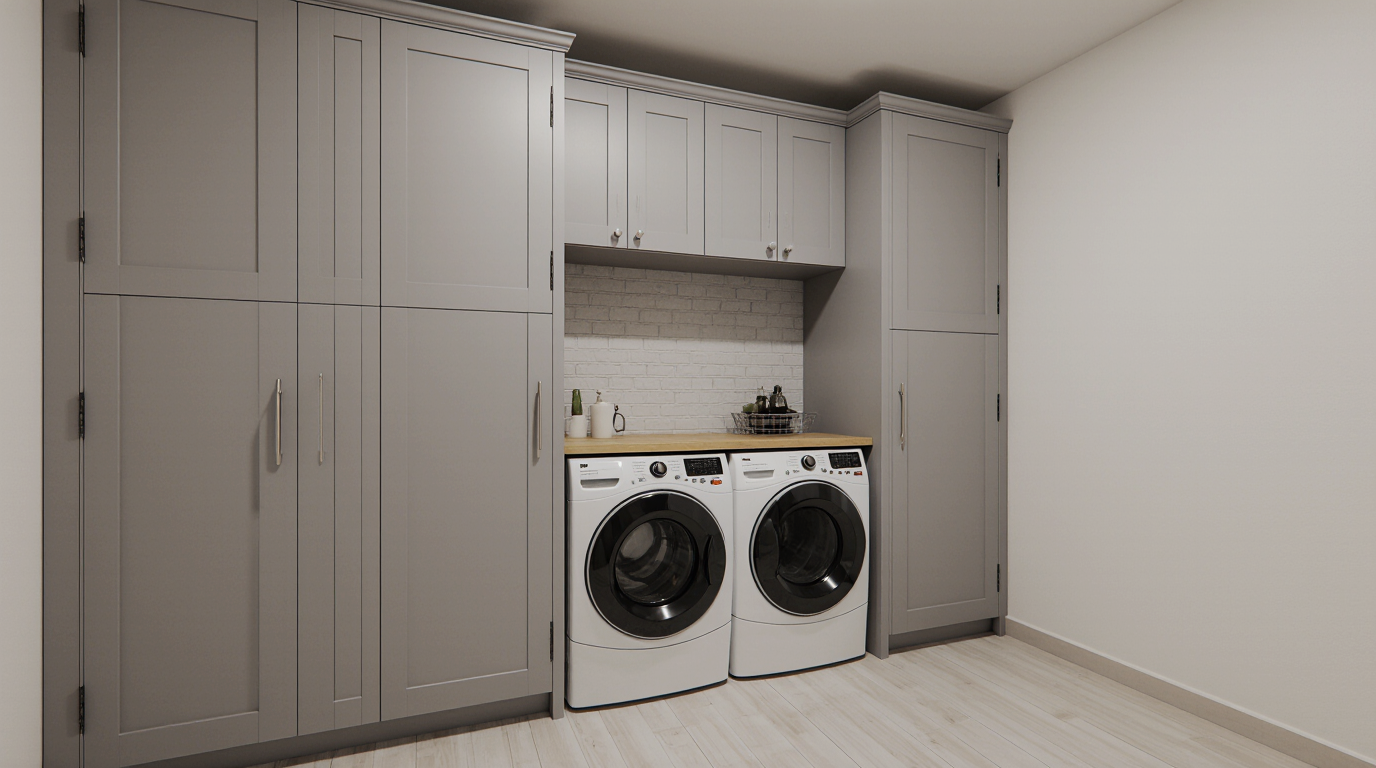
One of the most significant directions in contemporary laundry design involves maximizing vertical real estate through ceiling-height cabinetry. This architectural approach converts the room from a simple chore area into a genuine storage fortress. By running components right up to the ceiling plane, designers efficiently reserve every available cubic inch, reserving lower, easily accessible sections for daily necessities like detergent and dryer sheets, while using the elevated spaces for seasonal items, bulk supplies, or rarely used cleaning agents. When executed with flush-mounted doors and hidden pulls, this look achieves a clean, almost architectural integration, presenting a unified wall surface that eliminates visual noise. For a crisp, uncluttered appeal, opting for push-to-open mechanisms over traditional pulls strengthens this seamless façade, granting a minimalist appeal that is highly sought after in contemporary interiors.
The conversation around laundry room cabinets today must highlight the concept of multifunctionality. Cabinets are no longer mere containers; they are integrated workstations. Consider the cleverness of pull-out ironing board drawers, cleverly tucked away within standard base cabinet dimensions. This negates the need for a cumbersome, freestanding ironing board, freeing up precious floor space. Similarly, innovative cabinetry incorporates integrated sorting systems. Imagine a deep drawer bank fitted with premium sliding mechanisms that houses labeled, pull-out bins for whites, darks, and delicates—a massive upgrade from the standard rolling hamper. These utility-focused drawers ensure that sorting happens instantly and efficiently, streamlining the entire laundry cycle from the moment an item enters the room.
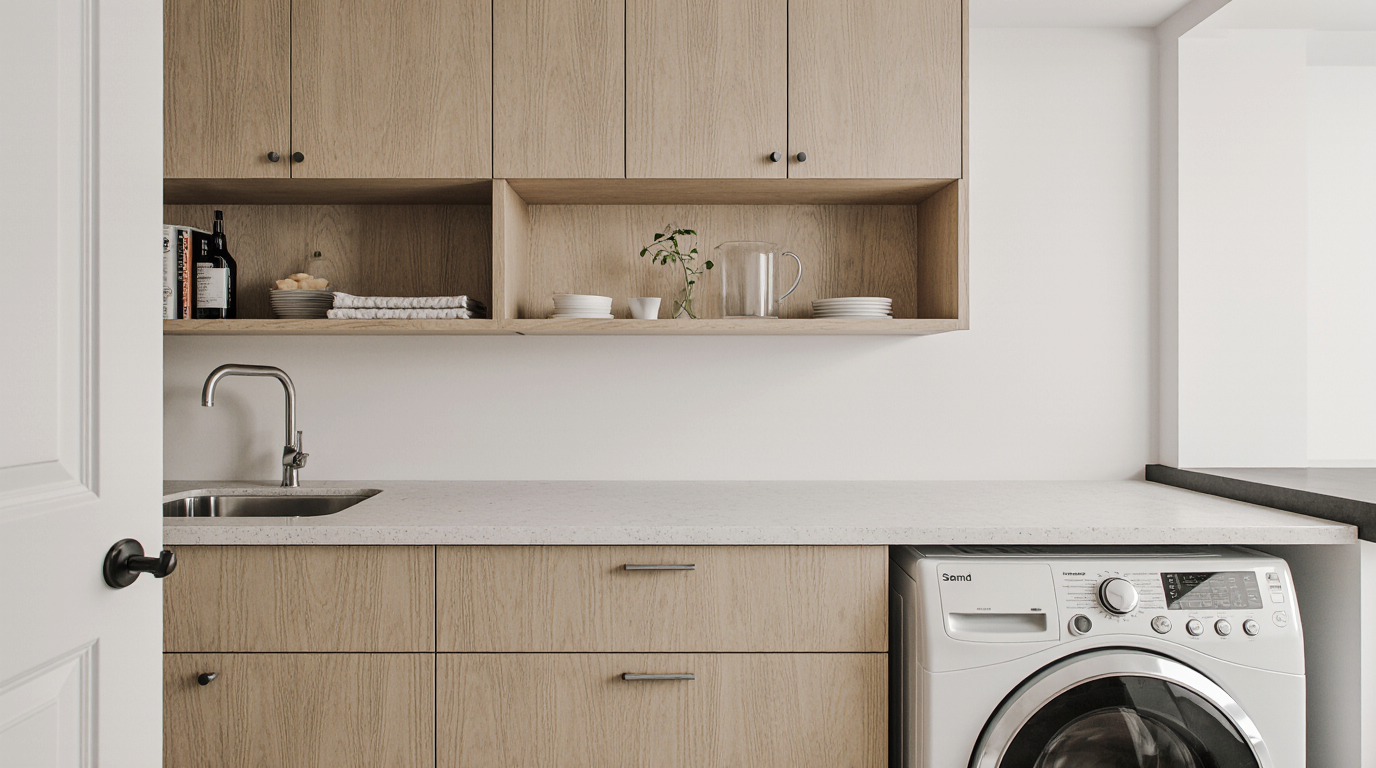
Material selection determines resilience and style in this damp, high-use environment. Moisture-resistant substrates are non-negotiable for high-performance cabinetry. While traditional wood is beautiful, modern designers frequently turn to thermofoil or high-quality MDF with durable polyurethane finishes that resist swelling and peeling caused by humidity and accidental spills of bleach or fabric softener. For homeowners leaning toward a warmer, more organic feel, reclaimed wood accents or base cabinets finished in a natural oak veneer provide textural depth, often paired with quartz countertops for superior stain resistance on the folding surface—a clear departure from older laminate choices.
Color plays an increasingly bold role. While bright white and soft gray remain timeless foundations, the current trend embraces saturated jewel tones and sophisticated neutrals. Deep navy blue, sage green, and even muted charcoal for the base cabinets add visual weight, especially when contrasted with airy open shelves or open shelving. This approach, often termed two-tone cabinetry, enhances the aesthetic interest and allows the room to feel more like a thoughtfully designed area of the home’s main living areas, rather than a hidden service zone. The introduction of glass-front doors on select upper cabinets can prevent a uniform appearance of solid panels, providing a design feature to display neatly stacked linens or decorative baskets, showcasing an adherence to curated organization.
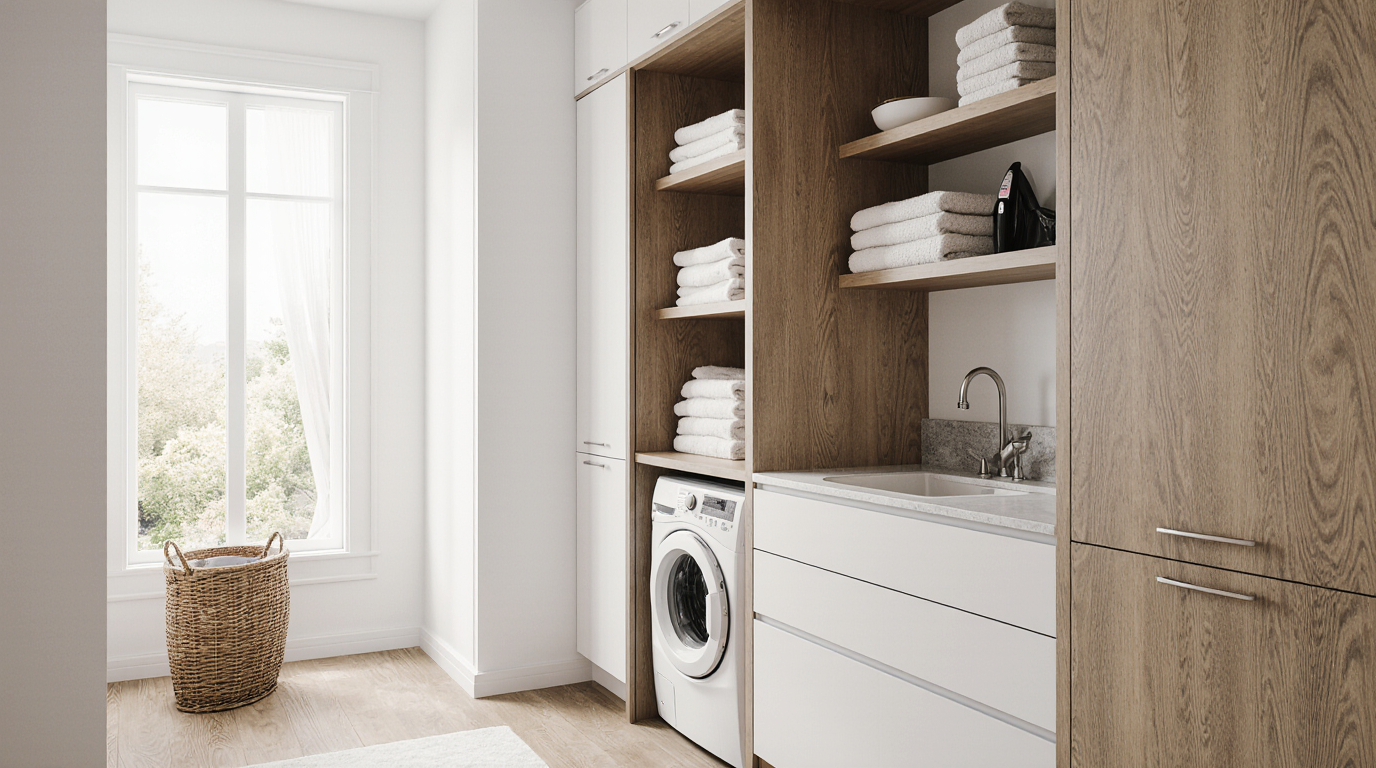
The marriage of closed storage with thoughtfully designed open shelving is another hallmark of superior laundry room architecture. Base cabinets should be reserved for bulky supplies and hidden necessities, such as pull-out containers for trash or recycling. Above the countertop, a balanced application of open shelving allows for easy access to supplies of items like neatly rolled towels or decorative storage baskets made of woven materials. This mix follows a key organizational rule: closed cabinets handle the bulk of necessary but visually unappealing supplies, while open shelves manage the decorative elements.
For smaller or more constrained spaces, the concept of the European laundry—where the machines and storage are housed completely behind closed doors and concealed by pocket or barn doors—necessitates highly efficient, often modular cabinet systems. In these scenarios, under-counter drawer systems designed specifically for laundry tools are vital. Think about narrow, vertical cabinets housing extendable drying racks that fold flat against the interior door or wall when not in use. Every millimeter must serve a purpose, leading to designs that often feel a marvel of small-space engineering than a typical utility space.
The ultimate layer of sophistication involves the cabinet hardware and lighting that complements the chosen finish. For a modern look, long, linear pulls in matte black or brushed brass introduce a clean, graphic element against painted surfaces. Conversely, if a Modern Farmhouse or Transitional style is desired, subtler knobs or subtle cup pulls can support the softer aesthetic without competing with textured elements like shiplap paneling on the walls. The hardware selection is the jewelry of the cabinetry, capable of shifting the entire mood of the room from starkly utilitarian to warmly inviting. Ultimately, achieving peak laundry room efficiency via cabinetry is about meticulous planning: ensuring every shelf, drawer, and door aids the smooth workflow and a more beautiful environment, making the laundry room a showcase to a point of genuine design pride. This careful consideration of ergonomic integration and material science ensures the cabinetry system supports the workflow first, the aesthetics second, with the two ultimately becoming inseparable and mutually reinforcing.