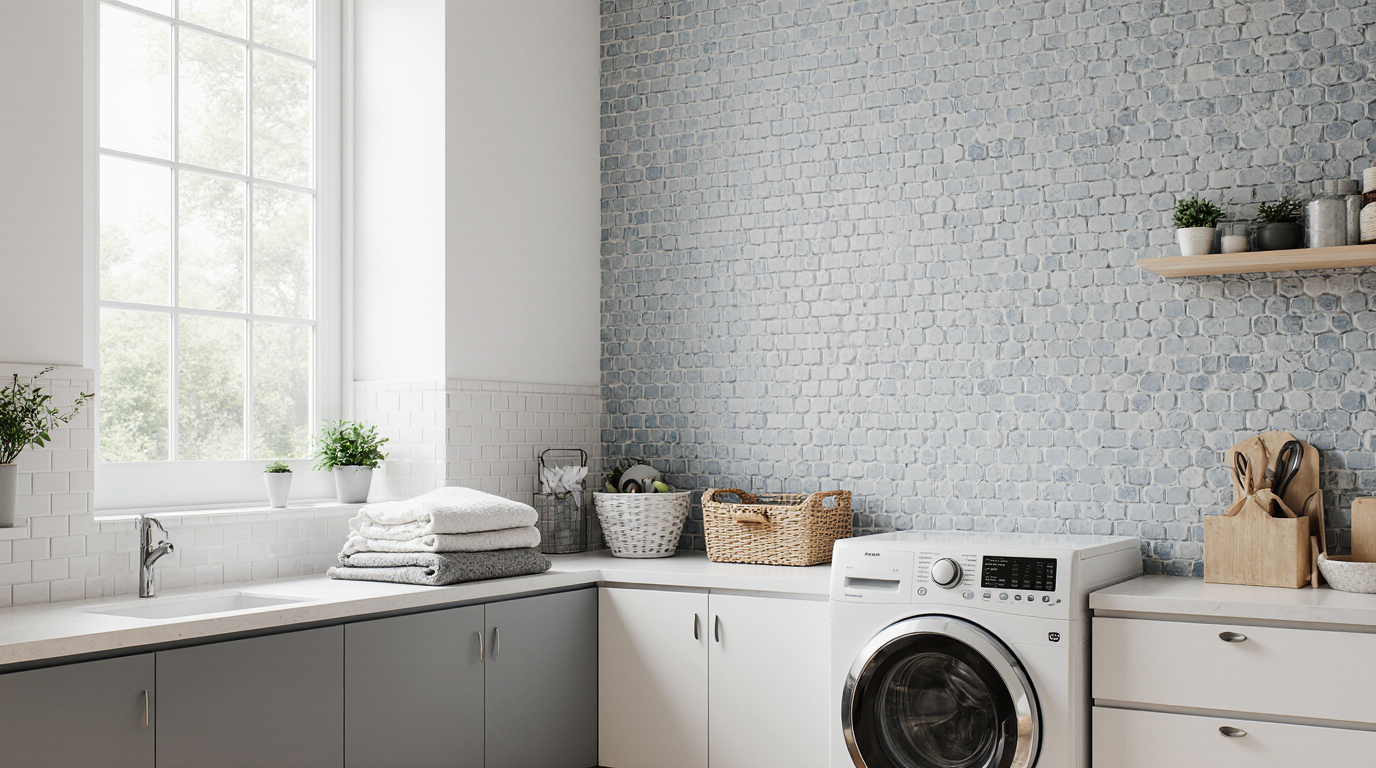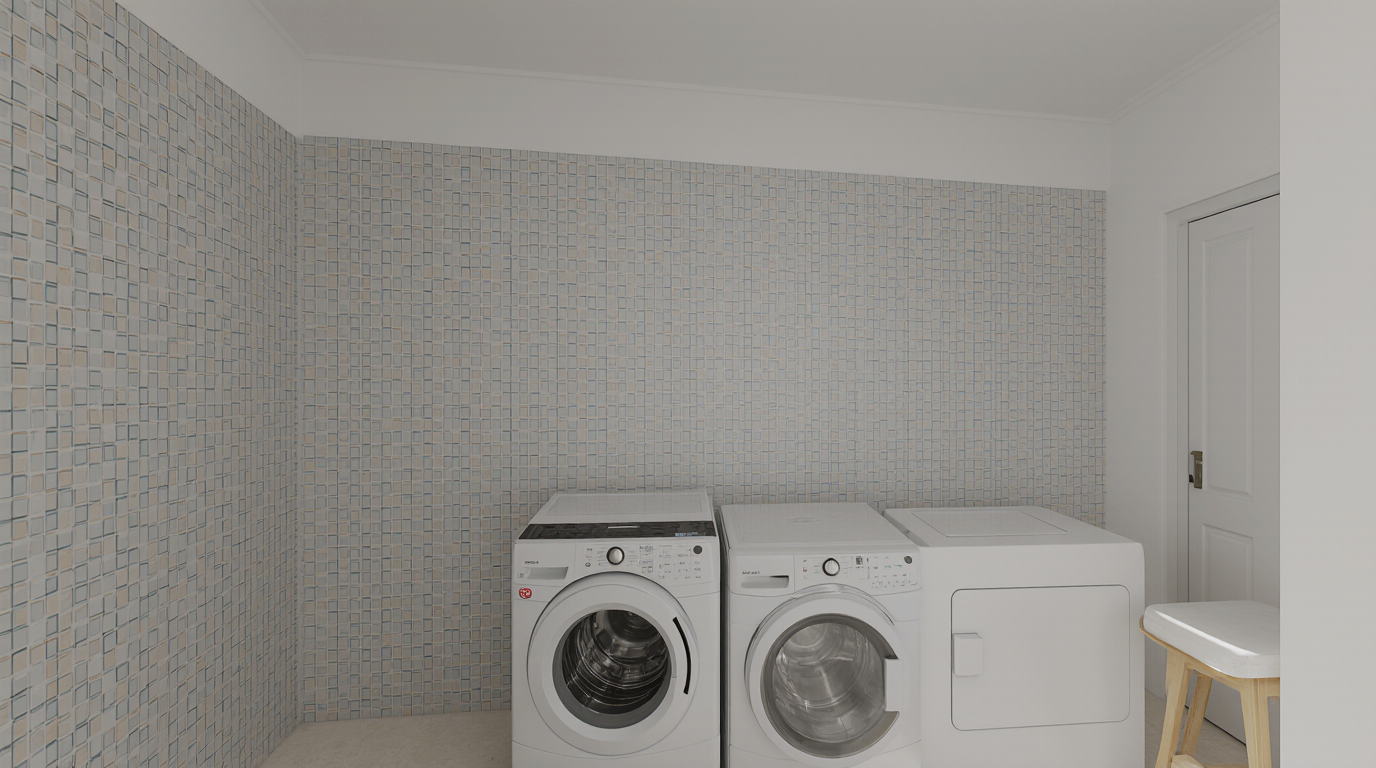
The floor in the utility area faces some of the harshest conditions of any surface in the house. It must simultaneously withstand the constant vibration and significant weight of heavy appliances, repel the caustic nature of cleaning agents and laundry chemicals, be ready for the inevitable accidental spill or hose failure, and, play a key role in the overall design narrative of the house. Choosing the right tile is essential for creating a room that is both visually appealing and uncompromisingly practical. From a design and functionality perspective, the choice of floor material is much deeper than simply picking a shade; it is a material science choice that dictates longevity and ease of maintenance.
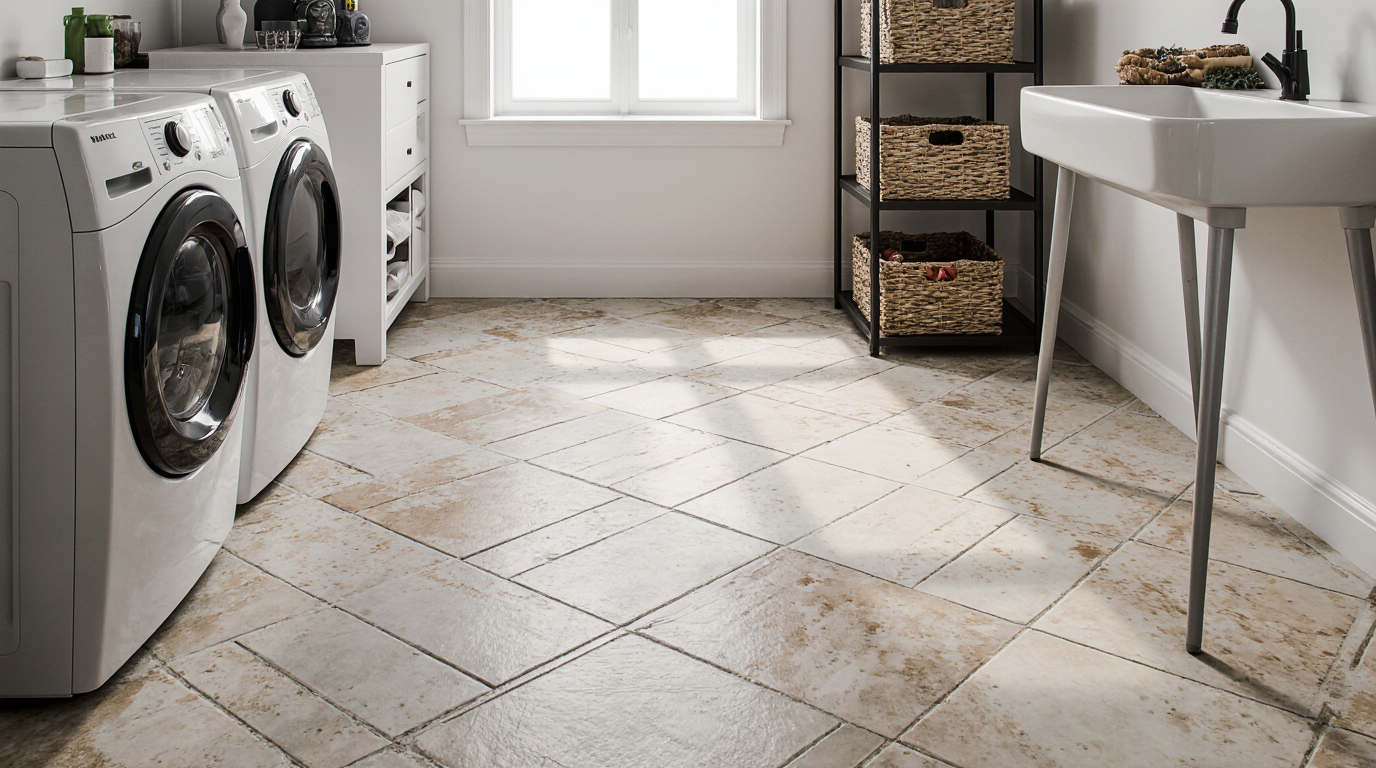
Porcelain is widely considered the ultimate material for demanding laundry room applications. This material is manufactured from refined clay fired at extremely high temperatures, yielding a final product that is remarkably dense with a minimal absorption rate. This low water absorption rate—often less than $0.5\%$—makes it inherently water-resistant, a non-negotiable feature in a room where hoses connect and spills are inevitable. Moreover, porcelain boasts excellent resistance to chips and fractures, creating a rigid, reliable foundation capable of supporting heavy, vibrating equipment without any risk of bending or failing, unlike some softer materials. Its surface is also highly resistant to stains from household chemicals, ensuring that the inevitable drop of bleach or stain remover does not result in a permanent eyesore. The design versatility of modern porcelain is staggering; one can achieve the sophisticated look of natural stone, the warmth of wood-look planks, or the raw, urban appeal of concrete-look tiles—all while retaining the material's superior performance characteristics.
While porcelain sets the benchmark, ceramic tile remains a respectable, often more budget-friendly alternative. Ceramic tiles are also water-resistant and easy to clean, but they are generally less dense and slightly more porous than their porcelain counterparts. In a utility space that doesn't see heavy, constant activity, a premium, correctly installed ceramic floor can certainly be adequate, though designers must remain mindful that excessive moisture penetration over decades could become an issue. The choice and installation of grout become a secondary, yet extremely important, line of defense to optimize the floor's overall performance. Choosing an epoxy-based grout or a high-performance cementitious grout that is subsequently sealed is not optional; it is a best practice. Sealing prevents moisture, dirt, and laundry residues from penetrating the porous grout lines, which are often the weak point in a tiled floor system, simplifying the entire cleaning regimen significantly.
The visual appeal of the room is heavily influenced by the tile's scale and design. For modern, streamlined aesthetics, large-format porcelain tiles (such as $24 \times 24$ inches or larger planks) are highly recommended. The key advantage of this approach is the dramatic decrease in the number of grout joints—fewer breaks create a much cleaner, more expansive appearance that is naturally simpler to maintain. Minimizing the grout lines results in less upkeep and a polished, uninterrupted aesthetic, especially when using a color-matched, tone-on-tone grout.
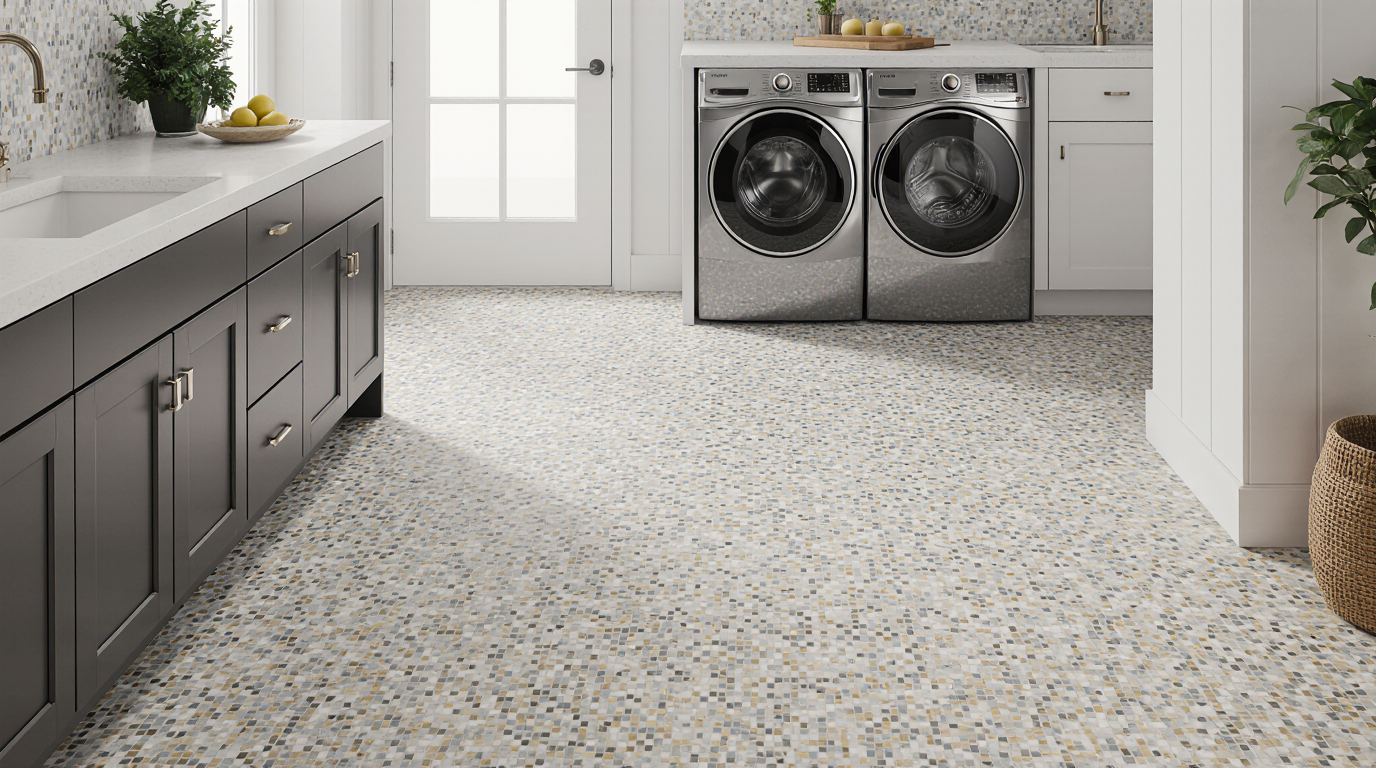
If a homeowner wants to inject character and striking visual interest, patterned tiles provide a perfect avenue for expression. Encaustic-look porcelain tiles, often featuring rich geometric or Moroccan-style designs, allow the functional utility room to transform into a design showcase. These patterns are inherently practical as they excel at camouflaging lint, dust, and minor scuffs between cleanings. Using a checkerboard layout, whether it's a traditional high-contrast black and white or a more subtle pairing of neutral shades, delivers a classic, enduring style that complements any cabinet design. For geometric patterns, it is crucial to observe how the pattern scale relates to the room's footprint; a design that seems well-proportioned in a large display might feel too cluttered and dizzying in a small room. In these instances, designers often restrict the bold pattern to the floor only, keeping walls and backsplashes serene and neutral to maintain design equilibrium.
An equally important consideration for utility areas is the tile's texture and its ability to prevent slipping. In an area prone to standing water from a leaking pan or washer overflow, safety must be a leading criterion. Highly polished or glossy finishes are often relegated to wall applications where footing is not a concern. For flooring, a matte finish or a tile with an inherent texture—such as slate-look porcelain or wood-look tiles with a slight grain texture—provides a higher coefficient of friction ($\textCOF$), enhancing slip resistance when the floor is damp. Small, textured mosaic tiles, benefiting from the many grout lines that act as tiny slip-resistant barriers, are also a fantastic, though more complex to install, choice.
Consider the color palette. A brilliant white color provides a pristine, sharp appearance, but it immediately highlights every speck of dirt. Mid-to-dark-toned grouts are the authority's choice for high-traffic utility areas, because they expertly conceal daily grime and minimize the need for labor-intensive, frequent deep scrubbing compared to lighter alternatives. Using brick-format porcelain in a sophisticated herringbone pattern with a dark grout can evoke the durable charm of a traditional industrial space, all while delivering cutting-edge performance. To achieve a brighter, more open atmosphere, shades of light grey, gentle taupe, or creamy off-white offer the desired lightness without the relentless upkeep required by true white. By synthesizing material science—choosing dense porcelain—with strategic design choices—like pattern scale and grout color—the laundry room floor transcends its utilitarian roots to become a foundational element of a highly efficient and aesthetically pleasing space.